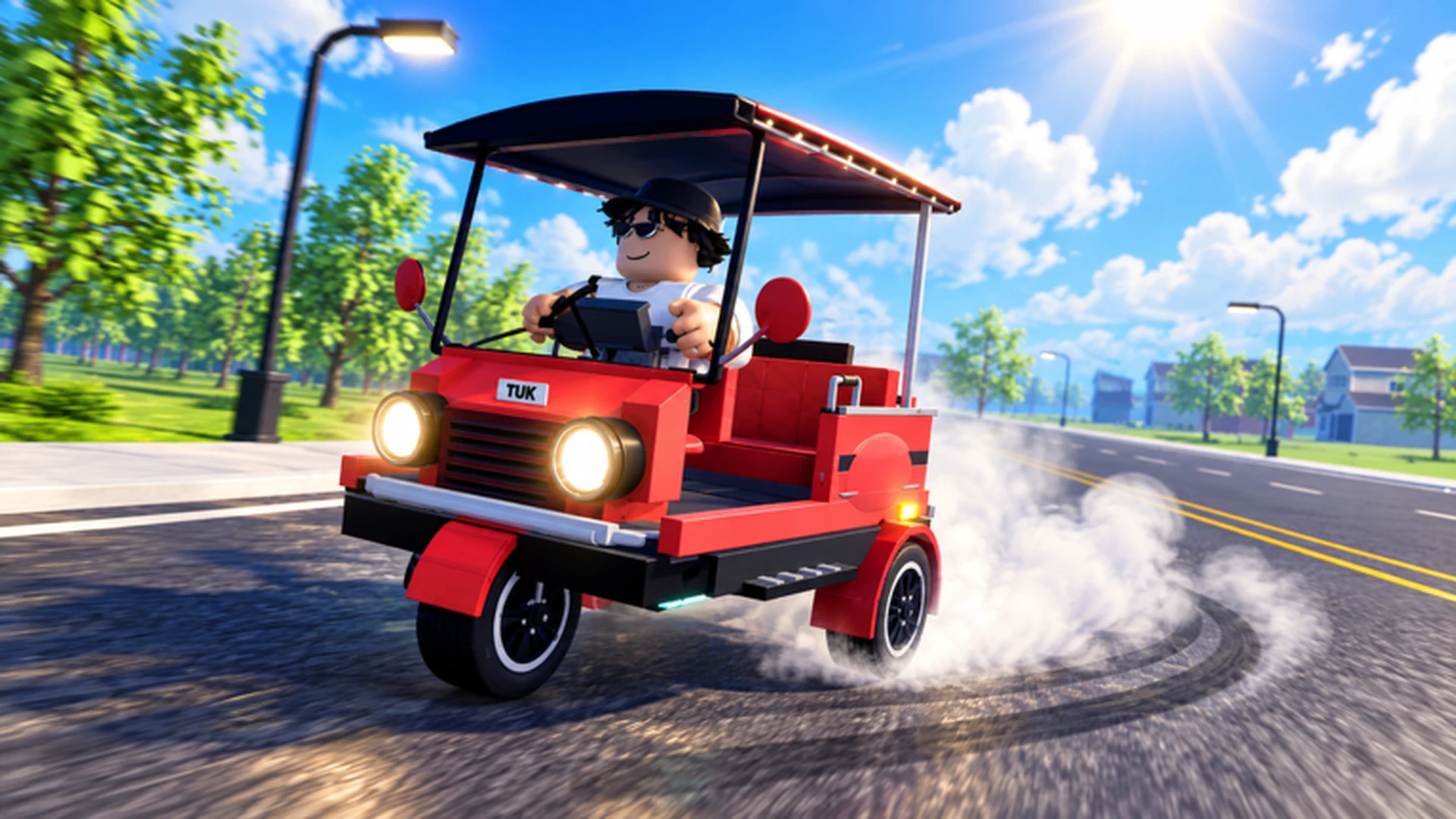
- Drive A Tuk Tuk map: The world includes multiple environments with changing weather and day-night cycles.
- Route planning beats raw speed: Familiar, repeatable routes earn cash more reliably than long unknown ones.
- Weather and night driving: Conditions change visibility and grip, so adjust braking and steering habits.
- Early strategy: Master one short loop first, then expand to longer routes after upgrades.
- Cash loop: Distance, speed, and quest rewards combine into the most consistent income cycle.
Map Overview and Environments
The Drive A Tuk Tuk map is built around one core loop: drive, earn cash, upgrade, and unlock faster vehicles. According to the official Roblox game page, the world features different environments along with dynamic weather and day-night changes, which means the same road can feel very different depending on when you drive it.
The map is best understood as a set of route types rather than a fixed list of named locations, since Lumora Inc. continues to add new environments through updates.
Urban Roads
- Frequent turns and stops
- Good for quest pickups
- Rewards handling and braking
Open Straight Routes
- Best for top-speed builds
- Strong distance-based income
- Fewer collision risks
Technical Back Routes
- Tight corners and obstacles
- Great for practicing control
- Slower but safer from traffic
| Route Type | Best Build | Income Style | Difficulty |
|---|---|---|---|
| Urban roads | Handling build | Quest-focused, frequent stops | Medium |
| Straight highways | Speed build | Distance and speed rewards | Low |
| Technical routes | Durability build | Long consistent runs | High |
| Mixed loops | Balanced build | All-around farming | Medium |
Drive a new route slowly once before pushing for speed. Memorizing turn locations reduces failed runs far more than an early top-speed upgrade does.
Weather and Day-Night Effects
The map's dynamic conditions are not just visual variety. They change how your Tuk Tuk behaves on the road, and players who adapt their driving style maintain more consistent earnings.
| Condition | Driving Impact | Recommended Adjustment |
|---|---|---|
| Clear day | Full visibility, normal grip | Push speed and long routes |
| Rain | Reduced grip, longer braking | Earlier braking, gentler steering |
| Night | Lower visibility | Slow down near intersections |
| Fog | Short sight distance | Short, familiar routes only |
Avoid testing unfamiliar routes during rain or night conditions. Crashes during low-visibility runs waste time and interrupt the earning loop you rely on for upgrades.
A practical habit is to reserve long distance runs for clear daytime conditions and switch to short urban loops when visibility or grip drops. Players who match their route choice to the current condition keep their cash-per-hour far more stable than those who always drive the same road regardless of weather.
Route Planning Step-by-Step
Building an efficient personal route on the map follows a clear progression. Work through these steps in order instead of jumping straight to the longest road you can find.
Explore at low speed
Drive each area once at moderate speed to learn turn locations, obstacles, and pickup points before worrying about pace.
Build one short loop
Choose a short, repeatable loop you can finish cleanly every time. Consistency matters more than theoretical payout.
Add daily and weekly quests
Check quest objectives and shape your loop so it naturally completes them while you farm distance and speed rewards.
Upgrade the bottleneck
Reinvest earnings into acceleration, handling, or braking, whichever most limits your current route performance.
Expand to long routes
Only move to longer routes after your build can hold a steady line at speed, then repeat the learning process there.
The most reliable early income combines one familiar loop plus active daily quests. Distance rewards, speed rewards, and quest payouts stack together without extra risk.
Best Routes by Playstyle and Stage
Different players need different routes from the same map. Match your route choice to your build and progression stage using the table below, drawn from the core drive-earn-upgrade loop described on the official page.
| Stage | Recommended Routes | Priority Upgrades | Goal |
|---|---|---|---|
| Brand new | Short urban loops | Acceleration, handling | Learn control, first cash |
| Early game | Familiar quest loops | Handling, braking | Stable repeatable income |
| Mid game | Mixed medium routes | Braking, top speed | Faster completion times |
| Late game | Long straight routes | Top speed, durability | Maximum distance income |
Racing Players
- Focus: Straight routes with clean corners
- Learn braking points before chasing records
- Speed build shines on open roads
Farming Players
- Focus: Repeatable loops with quest overlap
- Durability reduces interruptions
- Balanced build keeps income steady
Daily and weekly quests refresh on a schedule, so check objectives each session and adjust your route to overlap with them. A loop that also clears quests effectively pays twice.
Navigation Checklist and Map Mastery
Use this checklist each session to keep your route runs efficient and avoid the most common mistakes new drivers make on the map.
Map Mastery Goals:
- Drive every main route once at learning speed
- Build one short loop you can finish without crashes
- Match route length to current weather and visibility
- Align your daily loop with active quest objectives
- Reach a comfort level before moving to longer routes
If you crash or leave the road, do not try to correct at full speed. Brake fully, realign with the road, then accelerate back into your rhythm. Small corrections prevent bigger crashes.
FAQ
Q: Does the Drive A Tuk Tuk map change over time?
Yes. The developer adds new environments, routes, and systems through updates, and the map features dynamic weather and day-night cycles that change driving conditions within a single session. Check the official Roblox game page and update notes for the latest map additions.
Q: Which route type earns cash fastest?
For most players, a short familiar loop that overlaps with daily quests earns most reliably in the early game. Long straight routes become the best earners in the mid to late game, once acceleration, handling, and braking upgrades let you maintain speed safely.
Q: How does night or rain affect driving on the map?
Reduced visibility and grip mean longer stopping distances and less predictable steering. Adjust by braking earlier, steering more gently, and favoring short familiar routes until conditions improve.
Q: Should I memorize the map before upgrading my Tuk Tuk?
Both matter, but route knowledge usually gives the faster payoff. A driver who knows turn locations and braking points will out-earn a faster vehicle driven on unfamiliar roads. Learn one loop well, then upgrade the attribute that limits you most.