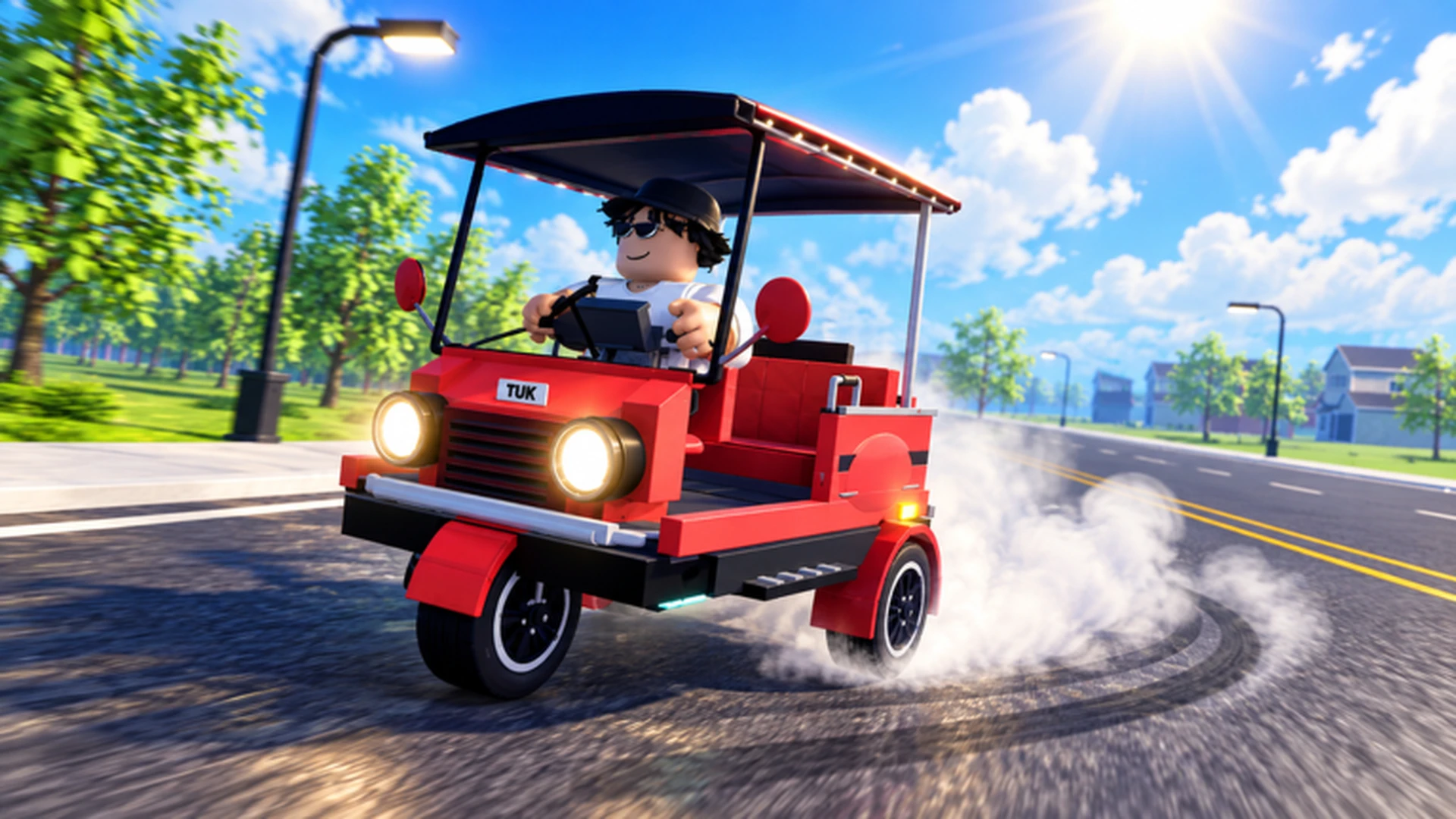
- Hidden locations in Drive A Tuk Tuk reward players who drive beyond the main roads and explore side paths.
- Environment variety matters: different environments, weather, and day-night cycles can reveal areas you may otherwise miss.
- Upgrade handling first: a Tuk Tuk with better handling explores rough terrain far more safely.
- Quests and races often send you into less-visited map corners, making them excellent exploration leads.
- Watch official channels for new map areas added in updates.
Understanding Hidden Locations in Drive A Tuk Tuk
Drive A Tuk Tuk is a Roblox driving simulator built around a simple loop: drive your three-wheeled Tuk Tuk, earn cash, upgrade performance, and customize your ride. Like most open driving maps, the game world contains more than just the main roads you see when you spawn. Hidden locations are the side streets, back roads, elevated areas, and tucked-away corners of the map that most players rush past while grinding cash.
These spots are worth seeking out for several reasons. They often provide quieter stretches of road for practicing control, they may connect to quest objectives or race checkpoints, and they simply make the game more enjoyable once the standard routes feel repetitive. The official Roblox game page also confirms that the game features different environments, weather conditions, and day-night variation, which means the map experience changes depending on when and where you drive.
Spend your first few sessions driving the edges of the map instead of repeating the same central route. You will discover shortcuts, side paths, and scenic areas that make later cash runs faster and more consistent.
What counts as a hidden location?
| Type | Description | Why It Matters |
|---|---|---|
| Side roads | Smaller streets branching off main routes | Shortcuts and lower-traffic driving |
| Off-map edges | Corners far from spawn | Quiet areas for practice runs |
| Elevated spots | Hills, ramps, raised sections | Good for testing speed and control |
| Quest areas | Zones tied to daily or weekly tasks | Direct cash and progress rewards |
| Race routes | Checkpoint paths through unusual terrain | Practice and record chasing |
Where Hidden Areas Usually Appear
Because Drive A Tuk Tuk is still a relatively new release (launched around September 2026), the community map knowledge is still developing. Based on how the game's environments and systems are structured, here are the most reliable places to search for hidden or overlooked areas.
Map Boundaries
- Drive to the far edges from spawn
- Follow fences, walls, and coastlines
- Look for gaps between terrain objects
Environment Transitions
- Watch where one environment blends into another
- Check tunnels, bridges, and overpasses
- Explore both day and night versions of areas
Quest and Race Leads
- Follow daily and weekly quest markers
- Trace race checkpoint routes off-road
- Revisit areas each new task sends you to
Search priority table:
| Search Zone | Effort | Chance of Finding Something | Notes |
|---|---|---|---|
| Spawn-area side streets | Low | Medium | Quick wins for new players |
| Map edges and boundaries | Medium | High | Most under-explored by casual players |
| Terrain transitions | Medium | Medium | Bridges and tunnels often overlooked |
| Weather-affected zones | Low | Medium | Fog, rain, or night can hide detail |
| New update areas | Varies | High | Fresh content draws less traffic at first |
The game supports day-night cycles and changing weather. Drive the same route at different times, because lighting and visibility can reveal paths, signage, or terrain details that are easy to miss in bright daylight.
Step-by-Step: How to Systematically Search the Map
Rather than driving randomly, use a structured approach. This method covers the map efficiently and works on any driving simulator layout.
Prepare Your Tuk Tuk
Before exploring, invest early cash in handling and acceleration rather than top speed. Better steering keeps you on narrow side paths, and quick acceleration helps you recover from dead ends and rough terrain.
Circle the Spawn Area
Drive a full loop around the central spawn zone, taking every side street that branches off. Mark mentally (or write down) any road that seems to lead away from the main action, since those are your first exploration leads.
Follow the Map Edge
Pick one direction and drive to the boundary of the playable area. Travel along the edge rather than turning back. Boundary roads frequently hide quiet zones, ramps, and scenery that central routes never show.
Chase Quest and Race Markers
Use daily quests and weekly quests as exploration guides. Objectives intentionally route players into varied parts of the map, and race checkpoints often pass through terrain you would never find on your own.
Revisit in Different Conditions
Return to promising areas during night cycles or weather changes. Reduced visibility works both ways: it can hide a path in daylight or make lit signage and neon details stand out at night.
Do not spend heavily on cosmetic customization early just to look good while exploring. Performance upgrades such as handling and braking deliver more practical value until you know the map well.
Exploration Builds: Match Your Tuk Tuk to the Terrain
Exploration driving is different from cash grinding or racing. You need forgiveness and control more than raw speed, because hidden areas often sit behind tight turns, uneven ground, or narrow passages.
| Build Focus | Speed | Handling | Durability | Best Exploration Use |
|---|---|---|---|---|
| Handling build | Medium | Very high | Medium | Narrow side streets and tight turns |
| Durability build | Medium | Medium | Very high | Long boundary runs and rough terrain |
| Balanced build | High | High | High | General map coverage for most players |
| Speed build | Very high | Medium | Medium | Open stretches once routes are known |
For most players, a balanced or handling-focused setup is the strongest exploration choice early on. Speed builds shine only after you already know the roads, since extra velocity means little if you crash at every unfamiliar corner.
Upgrade braking alongside handling. On unknown terrain, the ability to stop quickly prevents missed turn-offs and keeps a promising search run from ending in a crash and reset.
Exploration Goals and Rewards Tracking
Exploration in Drive A Tuk Tuk pays off indirectly: knowing the map improves your cash routes, your race performance, and your quest completion speed. Track your progress with this checklist.
Hidden Location Search Goals:
- Complete a full loop of the spawn area side streets
- Drive the entire boundary of the map in one session
- Complete a daily quest in an area you have never visited
- Drive one familiar route during the night cycle
- Trace a full race checkpoint route off the main roads
How exploration improves each game system:
| System | Exploration Benefit |
|---|---|
| Cash runs | Shorter, safer routes between earning points |
| Races | Knowledge of turns, surfaces, and racing lines |
| Quests | Faster navigation to objective areas |
| Upgrades | Fewer wasted purchases from repeated crashes |
Once you know hidden shortcuts and quiet roads, combine them into a repeatable cash loop. Distance and speed both contribute to earnings, and a driver who never crashes outearns a faster driver who keeps resetting.
FAQ
Q: Are there confirmed secret areas in Drive A Tuk Tuk?
The game features varied environments, weather, and day-night cycles across its map, which naturally creates less-visited areas, side roads, and terrain corners. No specific secret rooms or unlockable hidden zones have been officially documented yet, so treat hidden locations as under-explored map areas rather than confirmed secrets.
Q: Do hidden locations give cash rewards?
Hidden locations mainly help indirectly. Knowing side roads and shortcuts improves your cash routes, race times, and quest navigation, which all increase earnings. Direct rewards in Drive A Tuk Tuk come from driving, tasks, and races rather than discovery itself.
Q: What is the best Tuk Tuk setup for exploring hidden locations?
Prioritize handling, braking, and acceleration. Hidden areas often sit behind tight turns and uneven surfaces, so control matters more than top speed. Move to a speed-focused build only after you know the routes well.
Q: Do weather and time of day affect hidden locations?
Yes, practically. The game supports weather changes and day-night cycles, and reduced visibility at night or in poor weather can make you miss paths that are obvious in daylight. Driving the same area in different conditions is one of the easiest ways to spot something new.
Drive A Tuk Tuk receives updates that can add new environments and map areas. Check the official Roblox game page and the Lumora Inc. community hub for update announcements, since new content is the best time to find areas no one has explored yet.