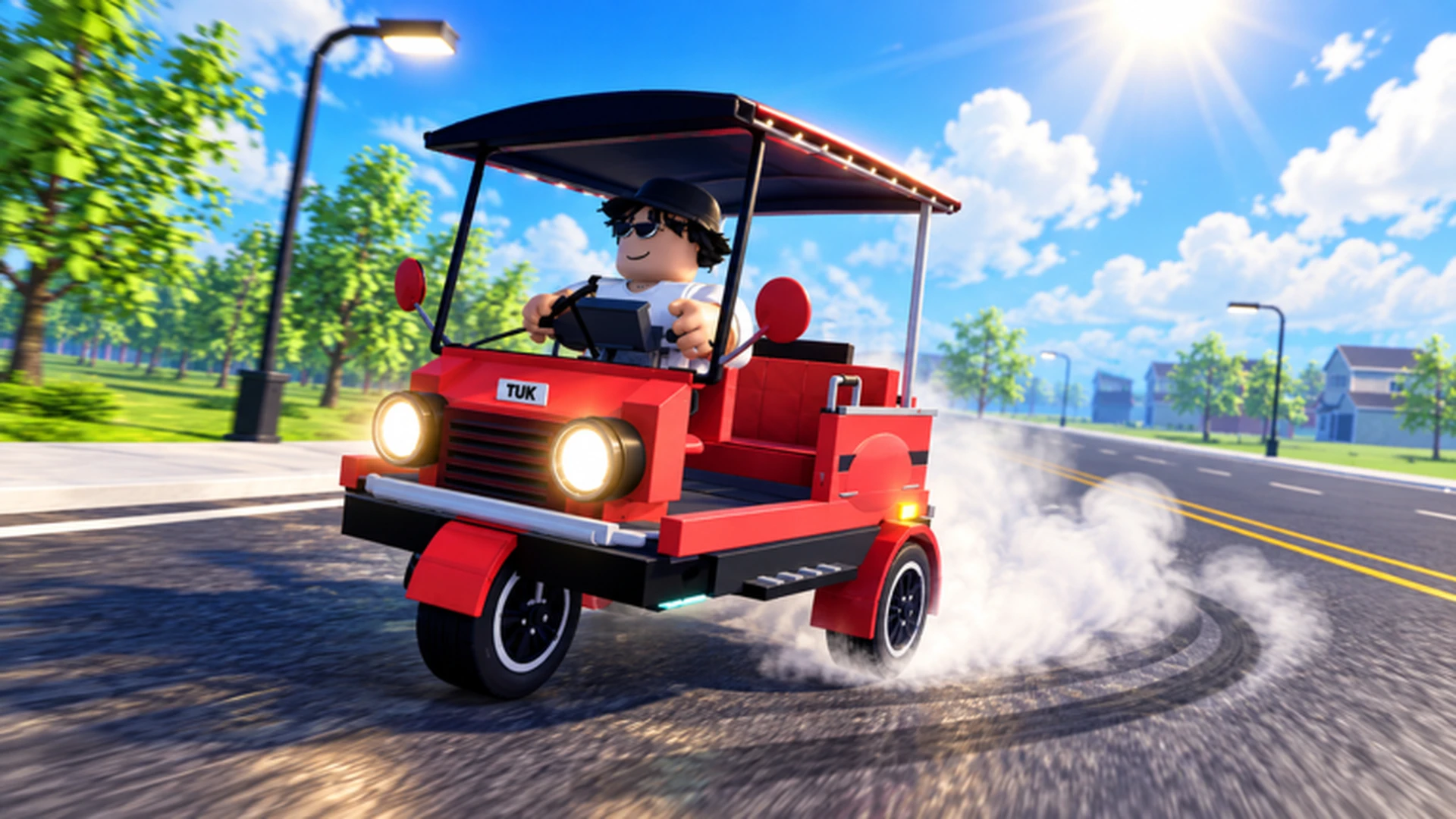
- Drive A Tuk Tuk best routes reward driving distance, speed, and consistency over risky shortcuts.
- Short familiar loops beat long routes early on because fewer mistakes means more cash per hour.
- Upgrade acceleration and handling first before attempting high-speed long routes.
- Races demand a speed build; money grinding rewards a balanced or durability setup.
- Weather and time of day change road conditions, so recheck a route before long runs.
Understanding Route Value in Drive A Tuk Tuk
In Drive A Tuk Tuk, your income grows from driving distance, sustained speed, and completed tasks — so the "best route" is the one you can finish repeatedly without crashing or losing control. A route that looks profitable on paper is worthless if you miss turns, overshoot corners, or end up off the road every few minutes. Route selection should always match your current build and skill level, not just the theoretical payout.
The game's economy rewards three things at once: distance traveled, time spent at speed, and task completion. That means the ideal route combines long drivable stretches with a manageable number of turns and ends near where you can start another activity.
| Route Factor | Why It Matters | Ideal Value |
|---|---|---|
| Straight-road ratio | Higher sustained speed means more speed-based income | 60–80% straights |
| Turn density | Fewer sharp corners reduces crash risk | Low to medium |
| Route length | Longer runs suit upgraded builds | Match your build tier |
| Restart access | Quick restart keeps cash per hour high | Easy re-entry point |
| Task overlap | Routes near quest targets double your rewards | High overlap preferred |
Choose a route you can complete cleanly three times in a row before choosing one that is theoretically faster. Consistency earns more than peak speed in the early and mid game.
Best Route Types by Progression Stage
Different stages of the game call for different route strategies. Your starter Tuk Tuk handles and brakes poorly, so early routes should stay simple. Once acceleration and handling upgrades are in place, longer and faster routes become the better cash source.
Short Familiar Loops
- Best for: Early game, starter Tuk Tuk
- Low crash risk, quick repeats
- Steady income while learning the map
- Pairs well with daily tasks
Long Distance Runs
- Best for: Mid to late game, upgraded builds
- Maximizes distance-based earnings
- Requires good acceleration and top speed
- Fewer restarts per session
Race and Record Routes
- Best for: Racing and leaderboard play
- Demands a speed-focused build
- Rewards precision cornering
- Higher risk, competitive rewards
| Stage | Recommended Route Type | Build Priority | Income Style |
|---|---|---|---|
| Early game | Short loops near spawn | Handling, acceleration | Steady |
| Mid game | Medium routes with task overlap | Braking, then top speed | Consistent to high |
| Late game | Long runs and race routes | Full speed build | High |
| All stages | Daily/weekly quest routes | Match current build | Bonus income |
Do not jump into long routes with a stock Tuk Tuk. Weak braking and handling turn profitable paths into crash-filled sessions that earn far less than simple loops.
Step-by-Step Route Optimization
Follow this process each session to squeeze more cash out of every route you drive.
Scout the Route Slowly
Drive the route once at moderate speed. Note sharp turns, crowded sections, and where you tend to overshoot. Learning the layout before pushing speed prevents costly mistakes.
Fix Your Weakest Attribute First
If you miss turns, upgrade handling. If you crawl out of corners, upgrade acceleration. If you overshoot stops, upgrade braking. Invest in the bottleneck, not spread purchases.
Run the Route in Repetitions
Repeat the same route several times rather than wandering. Repeated runs build muscle memory, cut navigation errors, and make your cash per hour predictable.
Layer Tasks onto Your Route
Check daily and weekly quests and pick routes that pass through task areas. Overlapping objectives effectively pays you twice for the same driving time.
Reinvest Before Customizing
Put early earnings into performance upgrades before spending on colors, wheels, or lights. Cosmetics do not shorten trips; performance does.
Sessions that repeat one known route with a quest overlap typically out-earn random exploration by a wide margin, because distance and speed income never gets interrupted by crashes or navigation mistakes.
Route Conditions: Weather, Time, and Hazards
Drive A Tuk Tuk features changing environments, weather, and a day-night cycle. These conditions affect visibility and grip, which changes how the same route performs.
| Condition | Route Impact | Recommended Adjustment |
|---|---|---|
| Night driving | Reduced visibility on dark roads | Slow into corners, rely on headlights |
| Rain or poor weather | Less predictable handling | Widen turns, brake earlier |
| Heavy traffic areas | More collision risk | Prioritize braking upgrades |
| Technical sections | Tight turns test handling | Use a handling-focused setup |
| Long straights | Best speed income | Use a speed build, full throttle |
Before starting a long route, look at the current weather and time of day. A route that was comfortable at noon may need slower corner entries at night or in rain.
Route Readiness Checklist
Use this checklist before committing to a serious grinding session.
Before Your Next Route Session:
- Complete one clean practice run of the route
- Upgrade the current weakest performance attribute
- Check daily and weekly quests for route overlap
- Confirm weather and time-of-day conditions
- Skip cosmetic purchases until performance goals are met
Route FAQ
Q: What are the best routes for earning cash fast in Drive A Tuk Tuk?
The most reliable early options are short, familiar loops that you can finish without crashing. As you upgrade acceleration and top speed, longer distance routes become the better cash source because they maximize distance- and speed-based income with fewer restarts.
Q: Should I use the same route for racing and money grinding?
Not usually. Racing rewards a speed-focused build with high top speed and acceptable handling, while money grinding favors balanced or durability setups that keep you on the road. Adjust your build priority based on the activity you plan to run.
Q: Which upgrades improve route performance the most?
Acceleration and handling give the biggest early gains because they prevent the mistakes that kill route income — slow corner exits and off-road crashes. Braking helps in crowded or technical sections, and top speed becomes valuable once control is solid.
Q: Do weather and time of day really change route results?
Yes. The game includes weather, day-night cycles, and varied environments. Night and poor weather reduce visibility and make handling less predictable, so adjust your speed and corner entries before pushing a route at full pace.