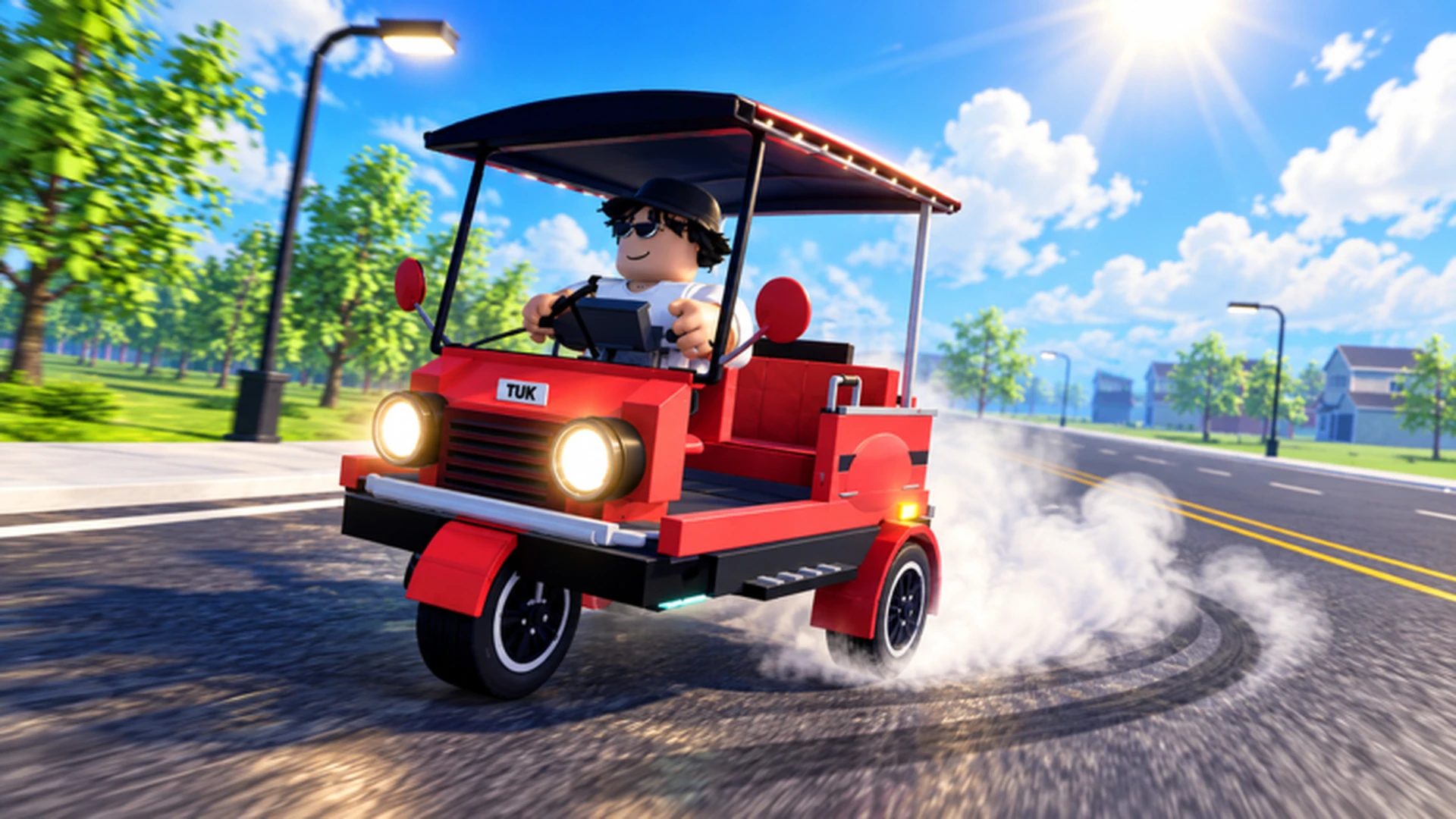
- Passenger pickup is a core income loop in Drive A Tuk Tuk, funding speed and handling upgrades.
- Stop fully before pickup prompts appear — moving vehicles often fail to register passengers.
- Short familiar routes beat long risky trips for consistent early cash.
- Upgrade acceleration and handling first so pickups and drop-offs repeat faster.
- Watch daily and weekly quests — they stack extra rewards onto normal fares.
How Passenger Pickup Works in Drive A Tuk Tuk
In Drive A Tuk Tuk, the main earning loop is built around driving your Tuk Tuk, picking up passengers or completing delivery-style tasks, collecting cash, and reinvesting it into vehicle performance. The official Roblox game page confirms the core cycle: drive, earn, upgrade speed and handling, customize, and complete daily and weekly quests across changing weather and day-night environments.
Passenger pickup rewards depend on completing the trip, not just starting it. That means route reliability matters more than raw top speed early on.
| Pickup Stage | What Happens | Common Mistake |
|---|---|---|
| Approach | Drive close to the passenger marker | Overshooting the stop at high speed |
| Stop | Fully brake near the pickup prompt | Rolling slowly past the marker |
| Board | Passenger enters after the prompt confirms | Driving away before boarding finishes |
| Transport | Follow the route to the drop-off | Taking risky shortcuts that cause crashes |
| Payment | Cash is credited on completion | Abandoning the trip halfway |
Treat every fare as a complete loop: stop, board, deliver, get paid. A finished short trip always earns more per minute than an abandoned long one.
Pickup Builds: Which Setup Carries Passengers Best
Passenger work rewards consistency. Compare these confirmed build roles before spending your cash:
Balanced Build
- High all-around performance
- Best for new drivers
- Fewest weaknesses during fares
Handling Build
- Very high steering control
- Best for tight urban pickup spots
- Slightly lower top speed
Durability Build
- Very high survivability
- Best for long passenger routes
- Fewer interruptions from crashes
| Build | Speed | Handling | Durability | Pickup Rating |
|---|---|---|---|---|
| Balanced | High | High | High | ★★★★★ |
| Handling | Medium | Very High | Medium | ★★★★ |
| Speed | Very High | Medium | Medium | ★★★ |
| Durability | Medium | Medium | Very High | ★★★★ |
Upgrade priority for passenger farming: acceleration first (quick starts after each stop), then handling (tight pickup locations), then braking (precise stops), and finally top speed.
Do not sink early cash into cosmetic customization before performance upgrades. Paint, wheels, and lights look great but do not shorten any passenger trip.
Step-by-Step Passenger Pickup Routine
Follow this routine to turn pickups into a repeatable income engine.
Learn the Controls First
Practice accelerating, braking, steering, and reversing in a safe area. On keyboard, W/A/S/D handles driving; on mobile, use the on-screen driving interface; on controller, use the left stick and displayed prompts.
Take Short Familiar Fares
Use the starter Tuk Tuk on routes you already know. Repeating short trips reduces navigation errors and builds a dependable cash baseline.
Stop Cleanly at Every Marker
Brake fully at each pickup and drop-off. Precise stops prevent missed prompts and save the seconds that add up across dozens of fares.
Reinvest in the Bottleneck
Spend each batch of earnings on the upgrade that most limits you — usually acceleration first, then handling or braking.
Add Quests and Longer Routes
Once your build is comfortable, combine passenger fares with daily and weekly quests and move to longer routes where your performance upgrades pay off.
Reinvested earnings compound: every acceleration and handling upgrade shortens future trips, so your cash-per-minute rises without changing what you do — only how fast you do it.
Income Comparison: Pickups vs Other Methods
| Method | Efficiency | Entry Requirement | Best Stage |
|---|---|---|---|
| Passenger / delivery fares | Steady | Usable Tuk Tuk, basic control | Early game |
| Repeating short routes | Consistent | Route knowledge, reliable control | Early-mid game |
| Long routes with performance build | High after upgrades | Improved speed, handling, braking | Mid-late game |
| Daily and weekly quests | Bonus income | Quest objectives available | All stages |
| Saving for major purchases | Long-term | A clear spending target | Mid-late game |
Quests and fares are not exclusive. Check daily and weekly quest objectives before driving, then choose passenger routes that naturally complete them for double reward value.
Pickup Session Checklist
Before You Drive:
- Review daily and weekly quest objectives
- Confirm acceleration and handling upgrades are current
- Pick two or three familiar passenger routes
- Check weather and day-night conditions on the route
- Set a cash target before buying upgrades or cosmetics
Drive A Tuk Tuk features changing environments, weather, and day-night cycles. Night and poor-weather runs are riskier — favor familiar, well-lit routes until your handling build is solid.
FAQ
Q: Why won't my passenger get in the Tuk Tuk?
In most cases the vehicle is still moving or too far from the marker. Come to a full stop at the pickup point and wait for the boarding prompt to finish before accelerating away.
Q: What upgrades help passenger pickup the most?
Acceleration is the top priority because fares involve frequent stops and starts. Handling and braking follow closely, since precise stops and tight pickup spots define trip success. Top speed matters least until routes are long.
Q: Are short or long passenger routes better for earning?
Early on, short familiar routes are more consistent and reduce failed runs. Longer routes become more efficient in mid-to-late game once your performance upgrades cut travel time and prevent crashes.
Q: How do quests relate to passenger pickups in Drive A Tuk Tuk?
The game includes daily and weekly quests that reward extra income. Choosing passenger routes that match quest objectives lets you complete both at once, effectively doubling the value of each session.